

Expert Immigration Solicitor Dublin for Your Legal Needs
When navigating the complex landscape of immigration law, having the right guidance is crucial. An expert immigration solicitor in Dublin can provide you with tailored legal assistance to help you understand your rights and options. Whether you’re seeking a visa, residency, or facing deportation proceedings, a knowledgeable solicitor can navigate the intricate legal processes for you.With an in-depth understanding of Irish immigration policies and procedures, your solicitor will ensure that all paperwork is meticulously prepared and submitted on time. They will also represent you in hearings and appeals, fighting for your best interests every step of the way. Key Highlights An expert immigration solicitor Dublin offers specialised legal advice for navigating complex Irish immigration law. Key services include managing work permits, family reunification, and Irish citizenship applications. Choosing a solicitor with proven experience and professional qualifications is crucial for your case. Top firms provide tailored strategies for individuals, families, and corporations in Dublin. Specialists can assist with appeals and judicial reviews if an application is refused. https://immigrationsolicitors.ie provides expert guidance for all your immigration legal needs. Introduction Navigating the landscape of Irish immigration law can be a challenging and often confusing journey. The rules are intricate, and the stakes
Read More
How to Appeal Deportation Order: A Step-by-Step Guide
How to Appeal Deportation Order: A Step-by-Step Guide Facing deportation can be a daunting experience, but understanding the appeal process can empower you to fight for your right to remain. Here’s a concise step-by-step guide on how to navigate this complex procedure. Step 1: Understand Your Grounds for Appeal: Begin by identifying the reason for your deportation order. Common grounds include violations of immigration law or failure to meet specific requirements. Understanding your unique circumstances is crucial. Step 2: Gather Supporting Documents: Collect all relevant documentation that supports your case. This may include your immigration history, personal identification, proof of residency, employment records, and any evidence that demonstrates your ties to the community. Organizing these documents will strengthen your appeal. Step 3: Consult an Immigration Attorney: Engage with an experienced immigration attorney who can provide tailored advice and represent you effectively. They’ll help you assess the strength of your case and guide you through the legal jargon. Step 4: Prepare Your Notice of Appeal: Draft a formal notice of appeal, clearly stating your reasons for contesting the deportation order. Key Highlights Here is a summary of the key points for appealing a deportation order in Ireland: Receiving a notification
Read More
Understanding Temporary Residency Ireland: A Complete Guide
Understanding Temporary Residency Ireland: A Complete GuideIreland, known for its stunning landscapes and vibrant culture, attracts people from all over the world. Whether you’re seeking educational opportunities, employment, or simply a new adventure, temporary residency in Ireland offers a pathway to experience this enchanting country. This guide aims to illuminate the essentials of obtaining temporary residency in Ireland. Key Highlights Non-EEA, non-UK, and non-Swiss nationals planning to stay in Ireland for more than 90 days must apply for temporary residency. The application process involves registering with the immigration authorities after arriving in Ireland. Successful registration results in an Irish Residence Permit (IRP), which proves your legal residency. Your eligibility and the conditions of your stay are defined by an immigration stamp in your passport. The type of temporary residency you are granted dictates your rights, such as the ability to work or study. Introduction If you are a non-EEA national planning to move to Ireland for work, study, or to join family, understanding the rules for your stay is crucial. For any visit longer than 90 days, you must secure permission to remain. This guide provides a complete overview of the Temporary Residency Ireland process, from eligibility and application
Read More
Work Permit Renewal Ireland: A Complete Guide to Success
Navigating the work permit renewal process in Ireland can seem daunting, but with the right information and preparation, you can successfully extend your stay and continue your professional journey. In this guide, we’ll break down the essential steps and requirements for renewing your work permit in Ireland, ensuring you have a clear path forward. Key Highlights The Work Permit Renewal Ireland process must be started up to 16 weeks before your current permit expires. Both you and your employer must meet specific eligibility criteria set by the Department of Enterprise, Trade and Employment. Most renewal applications for a General Employment Permit still require a Labour Market Needs Test to be satisfied. The renewal process is primarily managed through the online Employment Permits Online System (EPOS). Correctly submitting all required documents is crucial to avoid delays or refusal of your employment permit renewal. You can legally continue to work while your renewal application is being processed. Introduction Navigating the Work Permit Renewal Ireland process is essential for non-EEA nationals wishing to continue their employment legally in the state. Securing an extension of your employment permit is not just a formality; it is a critical step to maintaining your lawful immigration
Read More
Steps to Take for Ireland Visa Refusal Appeal Success
When faced with an Ireland visa refusal, it’s crucial to approach the appeal process methodically. Here are essential steps to enhance your chances of success: 1. Understand the Reasons for Refusal: Carefully review the refusal letter. Identify specific grounds for denial, whether related to insufficient documentation, lack of funds, or doubts regarding your intent. 2. Gather Supporting Documentation: Collect evidence that addresses each reason outlined in the refusal. This may include bank statements, travel itineraries, proof of ties to your home country, or additional identification documents. 3. Prepare a Comprehensive Appeal Letter: Draft a clear and concise appeal letter that outlines your case. Address each point raised in the refusal letter, providing explanations and referencing your supporting documents. Be respectful yet assertive in your tone. 4. Seek Professional Assistance: Consider consulting with an immigration lawyer or visa consultant who specializes in Irish immigration law. Their expertise can provide valuable insights and improve the quality of your appeal. 5. Submit Your Appeal Promptly: Ensure that you submit your appeal within the stipulated timeframe, usually 2 months from the date of refusal. Key Highlights If your visa application is refused, you have two months from the date on the refusal letter
Read More
Understanding Employment Permit Ireland: Types and Processes
Ireland has become a sought-after destination for many seeking employment opportunities, and understanding the intricacies of the employment permit system is crucial for prospective workers. The country offers various types of employment permits tailored to different needs, ensuring that both employers and employees are adequately supported.There are several key types of permits: 1. Critical Skills Employment Permit: Aimed at attracting highly skilled professionals in sectors experiencing shortages, this permit is designed to facilitate the hiring of individuals with specific qualifications and experience. It allows holders to apply for long-term residency after two years. 2. General Employment Permit: This permit is available for roles that do not qualify under the Critical Skills category. It allows employers to hire non-EU/EEA employees for positions where there is a shortage of local talent, provided they can demonstrate that they have made genuine efforts to recruit from the local labor market. 3. Intra-Company Transfer Employment Permit: This permit allows multinational companies to transfer employees from their overseas branches to an Irish branch. It is particularly useful for companies looking to enhance their workforce capabilities by sharing expertise across borders. Key Highlights An Employment Permit Ireland is essential for non-EEA nationals to work legally in
Read More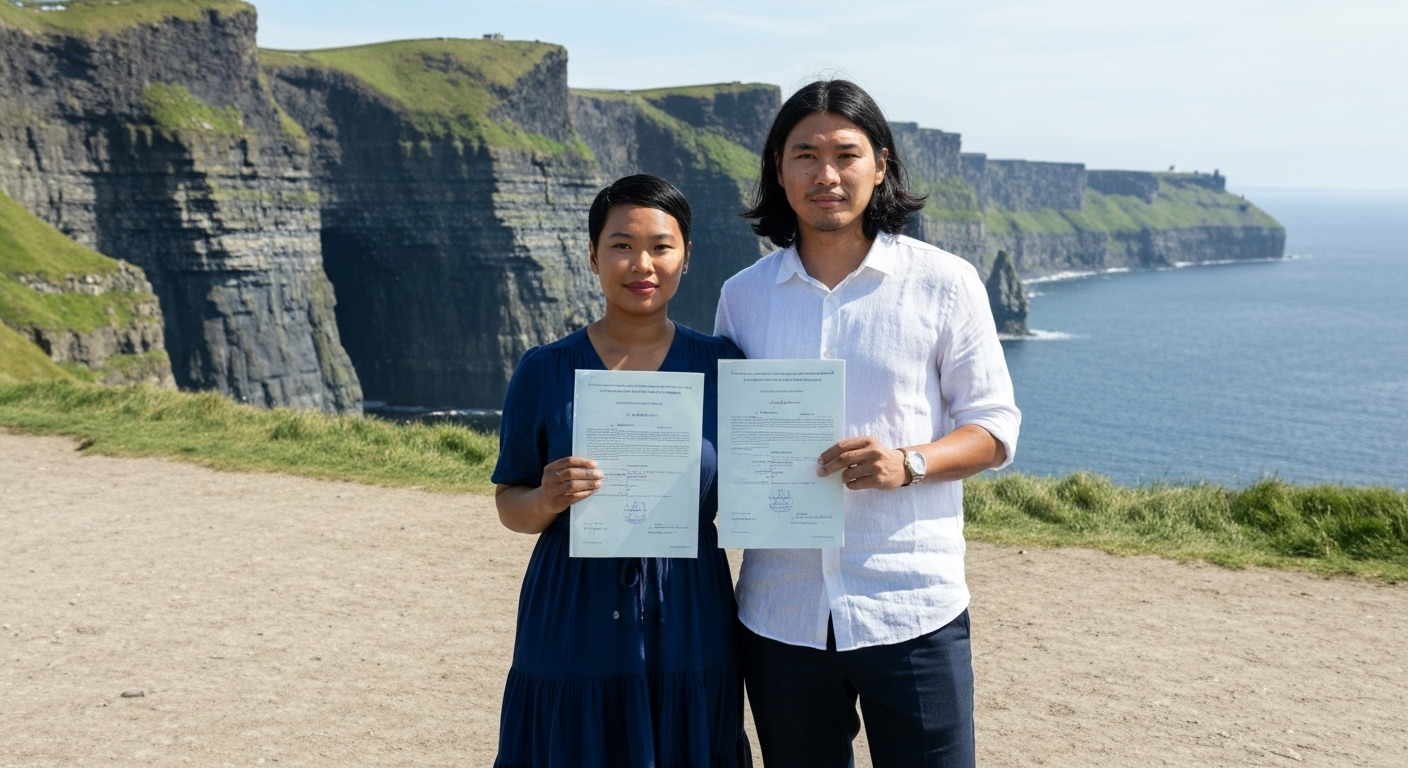
Understanding Residency by Marriage Ireland: A Complete Guide
Understanding Residency by Marriage in Ireland: A Complete GuideIn recent years, Ireland has become a popular destination for couples seeking to build a life together, especially those from different countries. If you’re considering moving to Ireland through marriage, understanding the residency process is crucial. This guide aims to provide you with essential information about obtaining residency by marriage in Ireland. Key Highlights Residency by Marriage Ireland is an immigration pathway for the non-EEA spouse of an Irish citizen to live in Ireland. The application process requires you to apply online and submit extensive supporting documentation. Being the spouse of an Irish citizen does not grant an automatic right to residency; you must meet all eligibility criteria. Successful applicants typically receive a Stamp 4 immigration permission, allowing them to work without an employment permit. The Immigration Service Delivery (ISD) handles these applications, with processing times often taking up to 12 months. Introduction If you are a non-EEA national married to an Irish citizen and wish to live together in Ireland, you must navigate the specific immigration permission process. This path, often referred to as Residency by Marriage Ireland, allows you to apply to join your spouse. Understanding the requirements of
Read More
Join Family Visa Ireland: A Complete Guide for Applicants
Joining loved ones in Ireland is a cherished aspiration for many. The Join Family Visa allows family members of Irish citizens and lawful residents to live together in this vibrant country. This guide aims to streamline your application process, providing clarity on requirements, documentation, and essential steps. Key Highlights The Join Family Visa Ireland is a long-stay visa essential for non-EEA nationals wanting to live with family members in Ireland for over three months. Family reunification applications require a sponsor, who must be an Irish citizen or a legally resident non-EEA national meeting specific criteria. All visa applications must be submitted online via the AVATS system, followed by the submission of physical supporting documents. Both the applicant and the sponsor must provide extensive documentary evidence, especially regarding their relationship and finances. Processing times can be lengthy, and success depends heavily on a complete and accurate application that meets all policy requirements. Introduction Reuniting with your loved ones is a significant life event, and Ireland provides a structured pathway for this through its immigration system. If you are a non-EEA national wishing to live with a family member who is an Irish citizen or a legal resident, the Join Family
Read More
Visa Overstay Ireland: Why Seeking Legal Help Matters
When individuals find themselves in the unfortunate situation of overstaying their visa in Ireland, the implications can be daunting. The fear of legal repercussions, including deportation or bans on re-entry, may lead many to avoid seeking assistance. However, navigating this complex landscape without professional guidance can exacerbate an already precarious position.Legal experts understand the nuances of immigration law and can provide crucial insights tailored to individual circumstances. They not only help clarify options for regularization but also assist in preparing necessary documentation to present a compelling case for leniency or reconsideration. Key Highlights A Visa Overstay Ireland is when you remain in the country beyond the stay permitted by an immigration officer. The length of stay stamped in your passport at the port of entry dictates your permission, not the validity dates on your visa. If your visa is about to expire while you are in Ireland, you should contact your local immigration office before your permitted length of stay ends to apply for an extension. An immigration officer can provide guidance on the application process, and ensure your passport and stamps are updated according to any extension granted. The length of stay stamped in your passport at the
Read More